
RAD Ballet Grades Explained: A Parent's Guide to Levels and Exams
RAD ballet grades explained, from Pre-Primary to Vocational. Ages, what each level involves and how exams work. A parent's guide from Intune Dance.
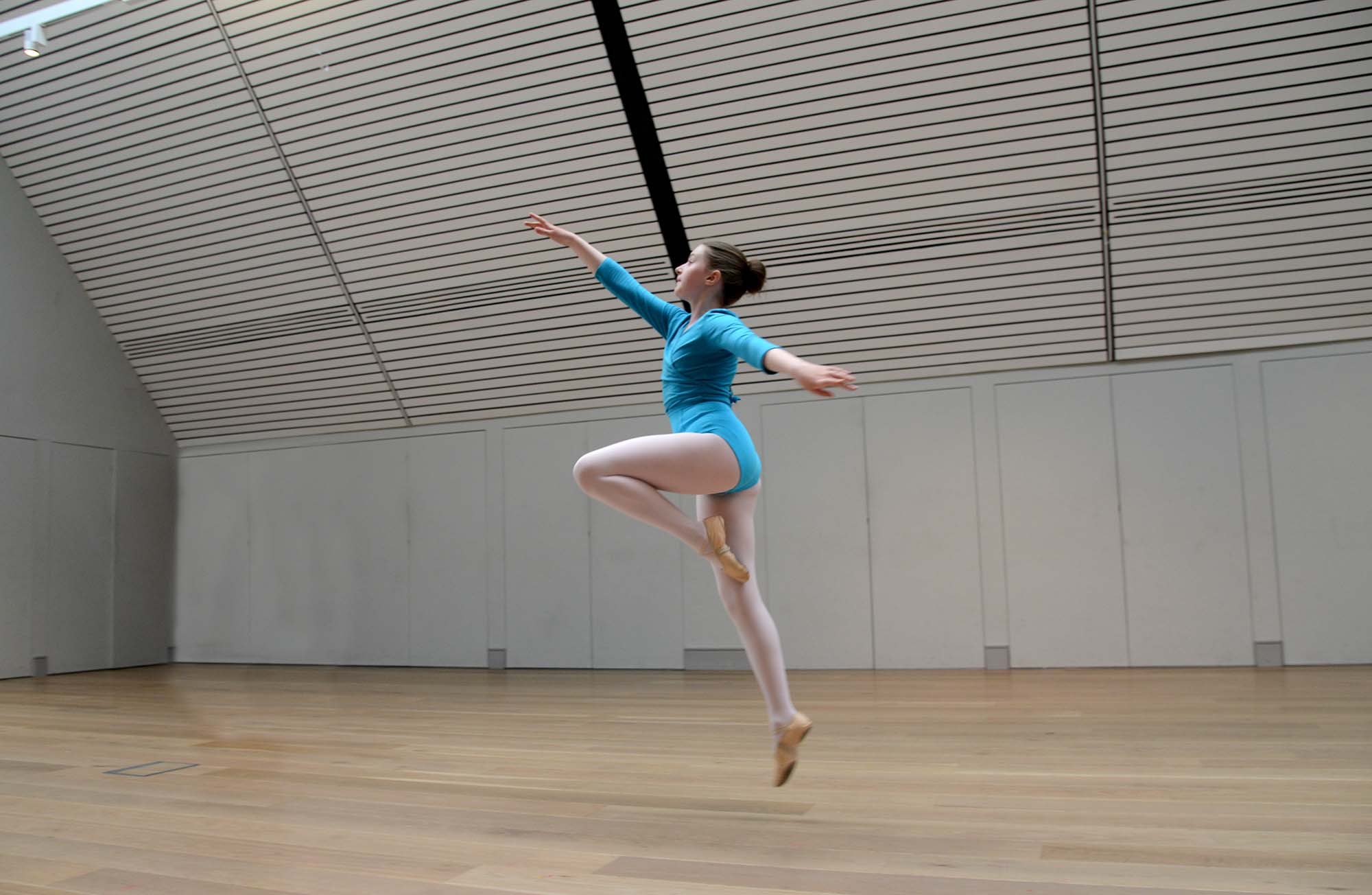
If your child has just started ballet, or you are weighing up whether to start them, you have probably come across phrases like "Pre-Primary," "Primary," "Grade 1," "Intermediate Foundation" and wondered what on earth they all mean.
This guide explains the Royal Academy of Dance (RAD) grades from start to finish: which age each level is designed for, what your child actually does in class, how exams work, what to wear, and how to know whether your child is ready to move up. It is written for parents, not for teachers, so we have skipped the jargon where we can.
We are an RAD-registered children's dance school running Saturday morning classes in Chipping Norton and Fairford, with families travelling in from Oxford, Witney, Banbury, Burford, Cirencester and the Cotswold villages. Everything below is grounded in what we see in our own studio every Saturday morning.
What is the RAD?
The Royal Academy of Dance (RAD) is one of the world's largest and most respected ballet education organisations. Founded in London in 1920, it sets a syllabus and a graded examination system that is taught in over 80 countries.
When parents talk about "RAD ballet," they usually mean two things at once:
- A teaching syllabus. A structured set of steps, exercises and musicality taught in a specific order.
- A graded exam system. Optional assessments where children dance for a visiting RAD examiner and receive a certificate.
The system is designed to grow with your child. Pre-Primary is for four and five year olds who have never danced before. The highest vocational levels are for serious teenage dancers preparing for full-time training. Most children who do RAD ballet sit somewhere in the middle and move up one grade per year.
Crucially, exams are optional. Your child can do RAD ballet for years and never sit a single exam if that is not the right path for them. They will still get all the benefit of the syllabus.
RAD ballet grades in order: the full ladder
Here is the full RAD progression from the youngest level upwards. We have given the school year ranges we use at Intune; some schools start a year earlier or later depending on the child.
| Level | Typical age | School year (UK) | Exam? |
|---|---|---|---|
| Pre-Primary in Dance | 4–5 | Reception | Optional Class Award |
| Primary in Dance | 5–6 | Year 1 | Optional Class Award |
| Grade 1 | 7–8 | Year 3 | Graded exam |
| Grade 2 | 8–9 | Year 4 | Graded exam |
| Grade 3 | 9–10 | Year 5 | Graded exam |
| Grade 4 | 10–11 | Year 6 | Graded exam |
| Grade 5 | 11–12 | Year 7 | Graded exam |
| Grade 6 | 12–13 | Year 8 | Graded exam |
| Grade 7 | 13–14 | Year 9 | Graded exam |
| Grade 8 | 14+ | Year 10+ | Graded exam |
| Intermediate Foundation | 11+ | n/a | Vocational exam |
| Intermediate | 12+ | n/a | Vocational exam |
| Advanced Foundation | 13+ | n/a | Vocational exam |
| Advanced 1 | 15+ | n/a | Vocational exam |
| Advanced 2 | 16+ | n/a | Vocational exam |
Two things stand out for most parents looking at this for the first time. First, the early levels (Pre-Primary and Primary) are not numbered grades; they are foundation classes that build the basics. Second, from Grade 6 onwards, children can choose to add the Vocational track in parallel with their grades if they are aiming at more serious training.
We will walk through each stage in turn.
Pre-Primary in Dance (ages 4–5, Reception)
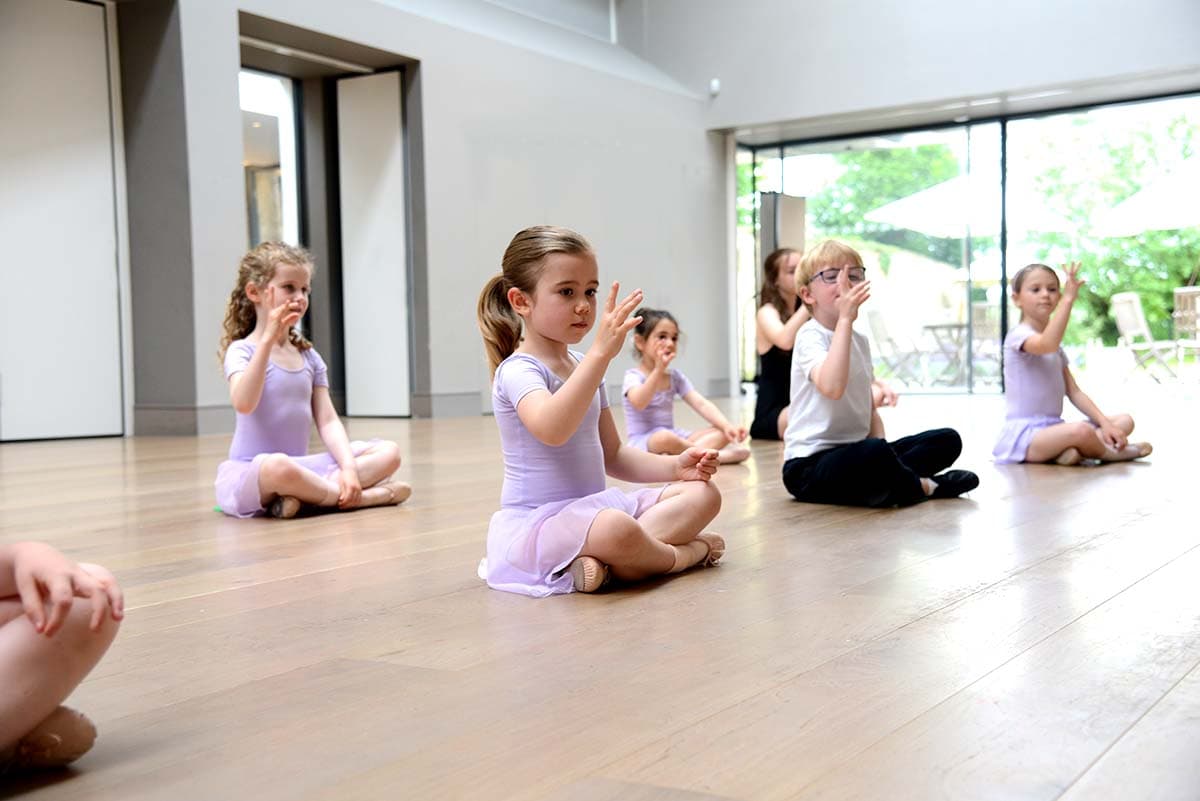
Pre-Primary is the first formal RAD level. It is designed for children in Reception, after they have started school. The class is short, usually 30 to 45 minutes, and focuses on:
- Listening to music and matching movement to it
- Simple shapes, jumps, skips and turns
- Working in a small group, taking turns and following a teacher
- Imagination-led movement (dancing as butterflies, wind, water and so on)
This is not ballet in the formal sense yet. There is no barre, no pointed shoes, no full uniform code. Children typically wear a soft pink leotard, ballet socks and ballet shoes, but most schools (including ours) are relaxed about exactly what your child wears in the first term.
For children younger than this, from age 2½ to 4, we recommend a creative pre-school dance class rather than starting RAD straight away. Our Dance Explorers sessions are designed for exactly this age group, and many of our Pre-Primary children have come up through Dance Explorers first. If you are unsure whether your child is ready, our post on what age children should start dance classes walks through the readiness signs in detail.
Curious whether your child is ready for Pre-Primary? Try a £10 trial class with no commitment.
Primary in Dance (ages 5–6, Year 1)
Primary is the natural next step after Pre-Primary. It runs for 45 minutes and starts to introduce real ballet vocabulary:
- First, second and third positions of the feet
- Simple ports de bras (movements of the arms)
- Skipping and galloping in time with music
- Free movement and character work to develop expression
- An end-of-class "reverence" (the formal ballet curtsey)
By the end of Primary, children have a sense of what ballet is and feel confident in a class environment. Many sit a Class Award at this stage. An examiner visits the studio and the class dances together. There is no individual pressure: it is more like a friendly performance with a certificate at the end.
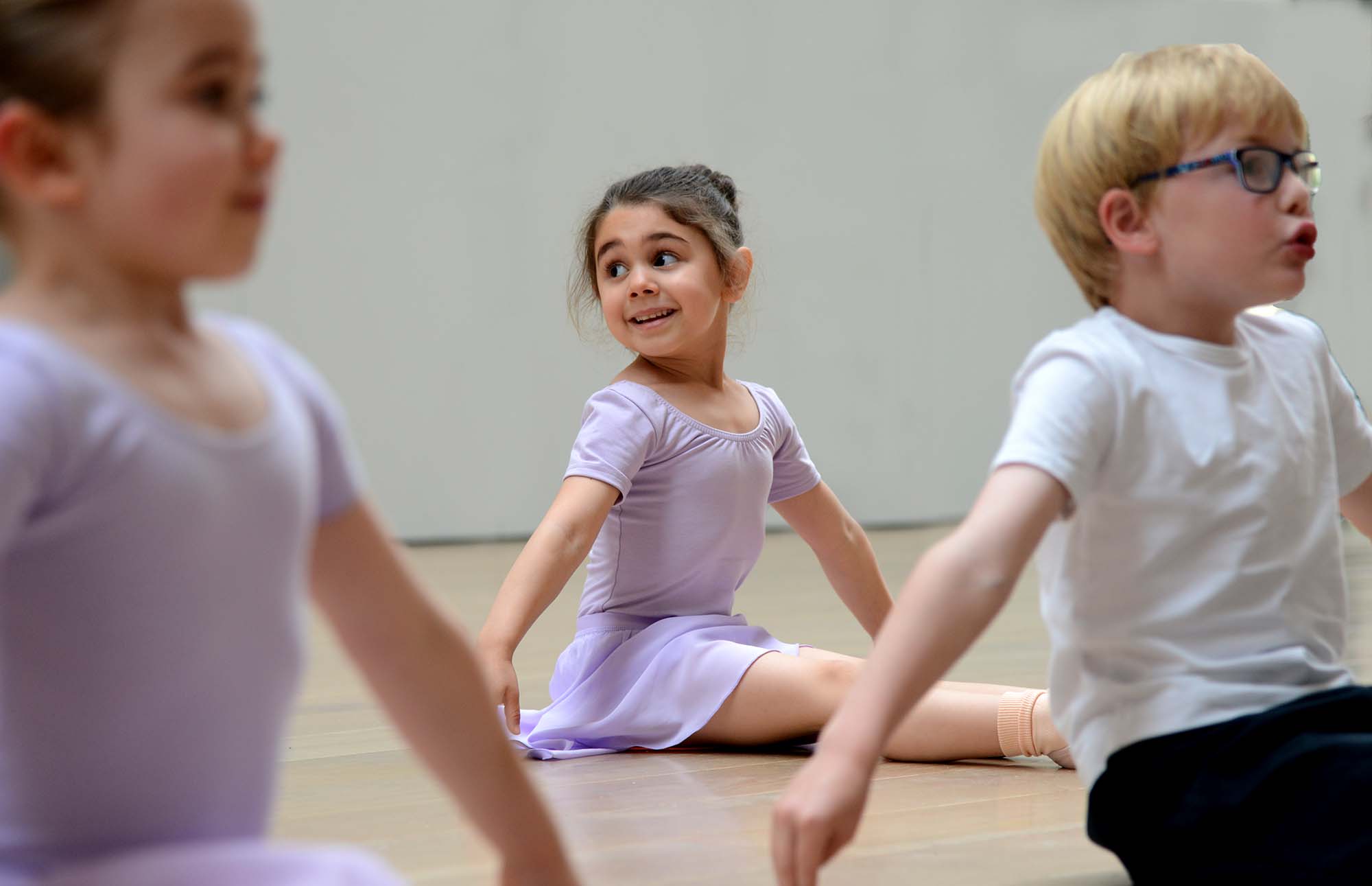
If your child has not done Pre-Primary, it is still completely fine to start at Primary level. We see this often with families joining from another activity, or whose children just were not ready a year earlier. A good teacher will fold them in.
Grade 1 to Grade 5: the main school years
This is where most children spend the bulk of their ballet education. Grades 1 to 5 follow children roughly through Years 3 to 7 at school. Each grade introduces new technical elements and music, and most children stay at one grade for a full academic year before moving up.
Across Grades 1–5 your child will progressively develop:
- Technique at the barre. Pliés, tendus, glissés, ronds de jambe and other foundational exercises.
- Centre work. Adage (slow, controlled movement), allegro (jumps), pirouettes (turns).
- Musicality. Hearing the rhythm and phrasing in the music and matching their movement.
- Performance. A "free movement" or character section in each grade, often inspired by folk dance or storytelling.
Exams are optional but most children sit them. A graded RAD exam is taken in a small group of four children, with a visiting examiner, in a hall set up like an exam room. The children dance the syllabus, are scored on technique, music and performance, and receive one of three results: Distinction, Merit or Pass. The examiner may also award Distinction with Honours at the highest level.
For a deeper look at what classes feel like in practice, see our guide on what happens at your first ballet class.
Grades 6 to 8 and the Vocational levels (teenage years)
From around age 12 upwards, the syllabus splits into two parallel paths:
- Graded ballet (Grades 6, 7 and 8). For children who love ballet but are not necessarily aiming for full-time training.
- Vocational levels (Intermediate Foundation, Intermediate, Advanced Foundation, Advanced 1, Advanced 2). For children pursuing more serious technical training, often alongside their grades.
The Vocational levels are where pointe work is formally introduced. Pointe shoes are not handed out by age. They are introduced when a teacher decides a dancer's strength, alignment and technique are ready. This is usually around 11 or 12 at the earliest, and never on demand.
You do not need to do Vocational levels to keep dancing. Plenty of teenagers happily continue with Graded ballet alongside school exams, drama and other commitments. Vocational is for the children who want to take it further.
How RAD ballet exams work
Here is what an exam actually involves, in plain English:
- Entry. Your teacher decides which children to enter for an exam, usually a term in advance. They are entered when they are technically ready, not by age alone.
- Preparation. The class spends roughly a term polishing the syllabus to exam standard. Children are taught how to enter, present their number, and curtsey at the end.
- Exam day. The examiner comes to the studio. Children go in groups of two or four. The exam itself is short (10–25 minutes depending on the grade).
- Results. Sent to the school a few weeks later. Each child receives a certificate, a feedback sheet and (for Distinctions) a special seal.
Failing an RAD exam is rare. Teachers do not enter children who are not ready. The process is designed to be encouraging.
If you want a fuller breakdown of what to wear, how children feel beforehand, and how we prepare children for exams at Intune, get in touch and we will happily walk you through it.
What to wear at each level
A common parent question. Here is the short version of our uniform guide:
- Pre-Primary and Primary. Pink leotard, pink ballet socks, pink leather ballet shoes. Hair tied back. No skirts or tutus needed.
- Grades 1–5. Pink leotard with skirt attached, pink convertible tights, pink ballet shoes. Hair in a bun for exams.
- Grades 6+ and Vocational. Black leotard, pink tights, pink ballet shoes. Pointe shoes if and when a teacher introduces them.
We deliberately keep the uniform code low-key for younger children. A child trying ballet for the first time does not need a full kit, and many parents find their child grows out of leotards quickly. We will tell you what is essential and what can wait.
How to choose the right ballet class for your child
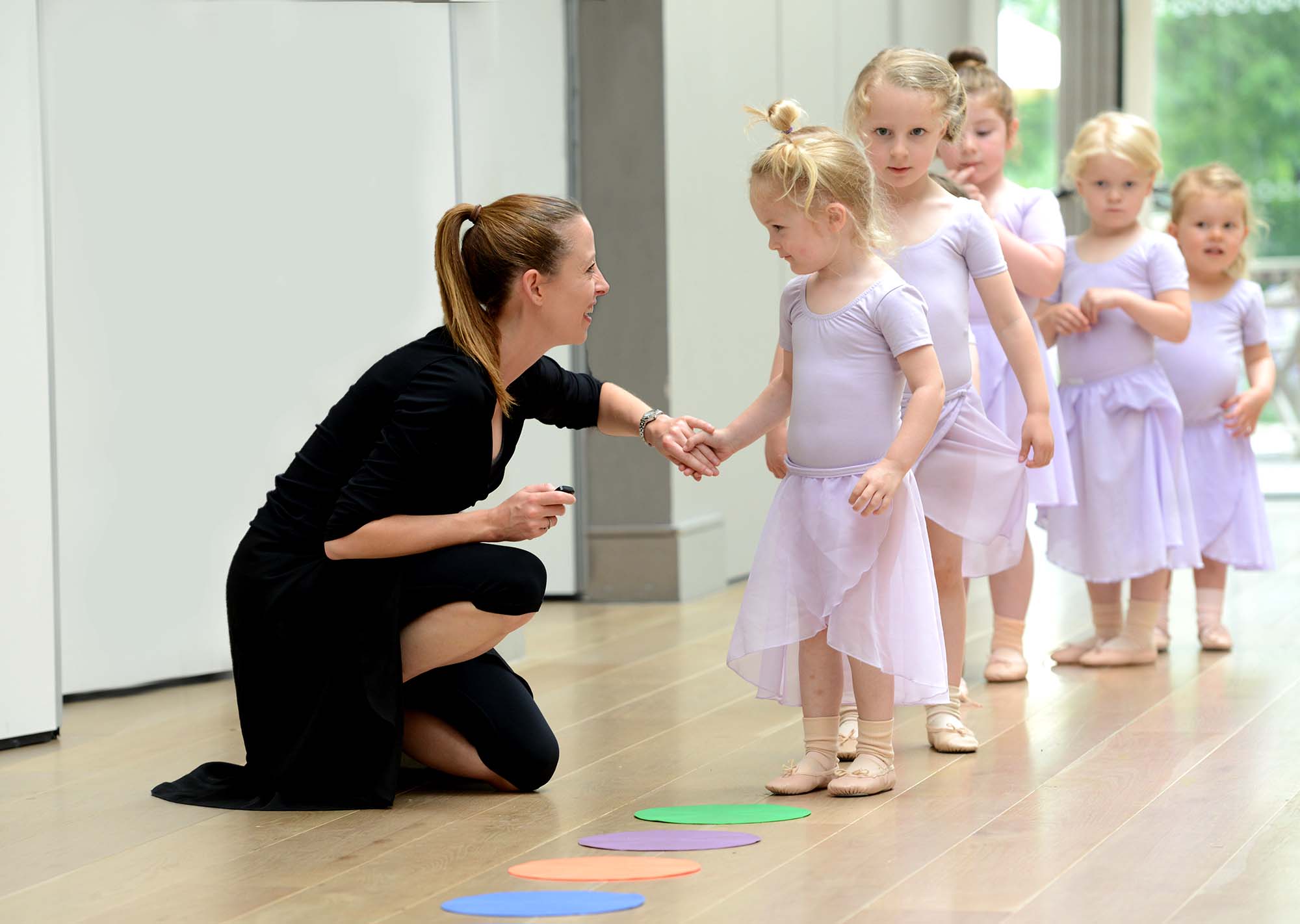
Reading a syllabus chart is not the same as choosing a school. A few things matter more than the grade label on the door:
- Teacher qualifications. RAD has its own teaching qualification (RAD-registered). Other respected qualifications include ISTD and BBO. Ask. A genuine RAD teacher will be on the RAD teacher register.
- Class size. A grade ballet class with 25 children in it cannot give individual feedback. We deliberately keep ours small so every child gets corrected, encouraged and known by name.
- Atmosphere. Some schools are highly competitive. Some are hobby-focused. Both have their place. What matters is finding the right fit for your child. A one-week trial is the only honest way to find out.
- Pathway. Does the school carry on past the early grades? It is frustrating to invest in a school for two years and discover they do not run Grade 4 onwards. We run the full ladder.
For a wider view of how to evaluate any children's dance school, our post on how to choose a children's dance school goes through this in detail.
Common parent questions
Does my child have to take exams?
No. Exams are optional and many of our children do RAD ballet without ever sitting one. The syllabus is valuable on its own.
What if my child fails?
It is very unusual. Teachers only enter children who are ready, and the lowest mark on the scale is still a Pass with a certificate. We have never had a child come away from an RAD exam thinking they "failed."
How long does each grade take?
One academic year is the norm. A child who has just started, or who has only been doing ballet recreationally, may take two years over a grade. A child working towards a vocational school audition may sometimes do two grades in close succession. There is no rush.
Can my child skip a grade?
Occasionally, yes, but rarely advisable. Each grade builds technique that is needed for the next. Skipping leaves gaps that show up later.
Is RAD ballet right for boys?
Yes. RAD has a strong tradition of male ballet education, and the syllabus has specific exercises designed for boys. Our classes welcome boys at every level.
How much does it cost?
Class fees vary by location and grade. Exam fees are charged separately and are paid to the RAD via the school. Our class fees are listed on our classes page; we are happy to break out the numbers if you get in touch.
What if my child is shy?
Shy children often thrive in ballet, particularly in small classes. We have written about this at length in how dance classes help shy children build confidence and my child is shy, will they settle at dance classes?
Where we run RAD ballet classes
We run RAD ballet (Pre-Primary through Grade 5 and beyond) on Saturday mornings at two venues in the Cotswolds:
- Chipping Norton. Glyme Hall on Burford Road and the Theatre Pop Up Studios at 73 Burford Road. Convenient for families across north Oxfordshire and the northern Cotswolds.
- Fairford. Fairford Community Centre. Convenient for families in Cirencester, Lechlade, Burford, South Cerney and Swindon.
Our Chipping Norton classes and Fairford classes cover the full RAD ladder appropriate for each location. If you are travelling in, we have written specifically about our dance classes near Oxford and dance classes near Banbury, with drive times and route notes.
Try a class for £10
The best way to find out whether RAD ballet is right for your child is to come and try a class. We offer a £10 trial with no commitment to continue. Your child gets to dance, you get to watch, and at the end you decide.
Use the class finder on our homepage to pick a class that matches your child's age and book a trial. We look forward to meeting you on a Saturday morning.
RAD-registered ballet for ages 4 upwards in Chipping Norton and Fairford. £10 trial, no commitment.