
Dance Classes for Boys: A Parent's Guide
Do boys go to dance classes? Yes, and the ones who do tend to love them. What boys get out of ballet and street dance, the worries parents have, and how to find a class where your son will feel at home.
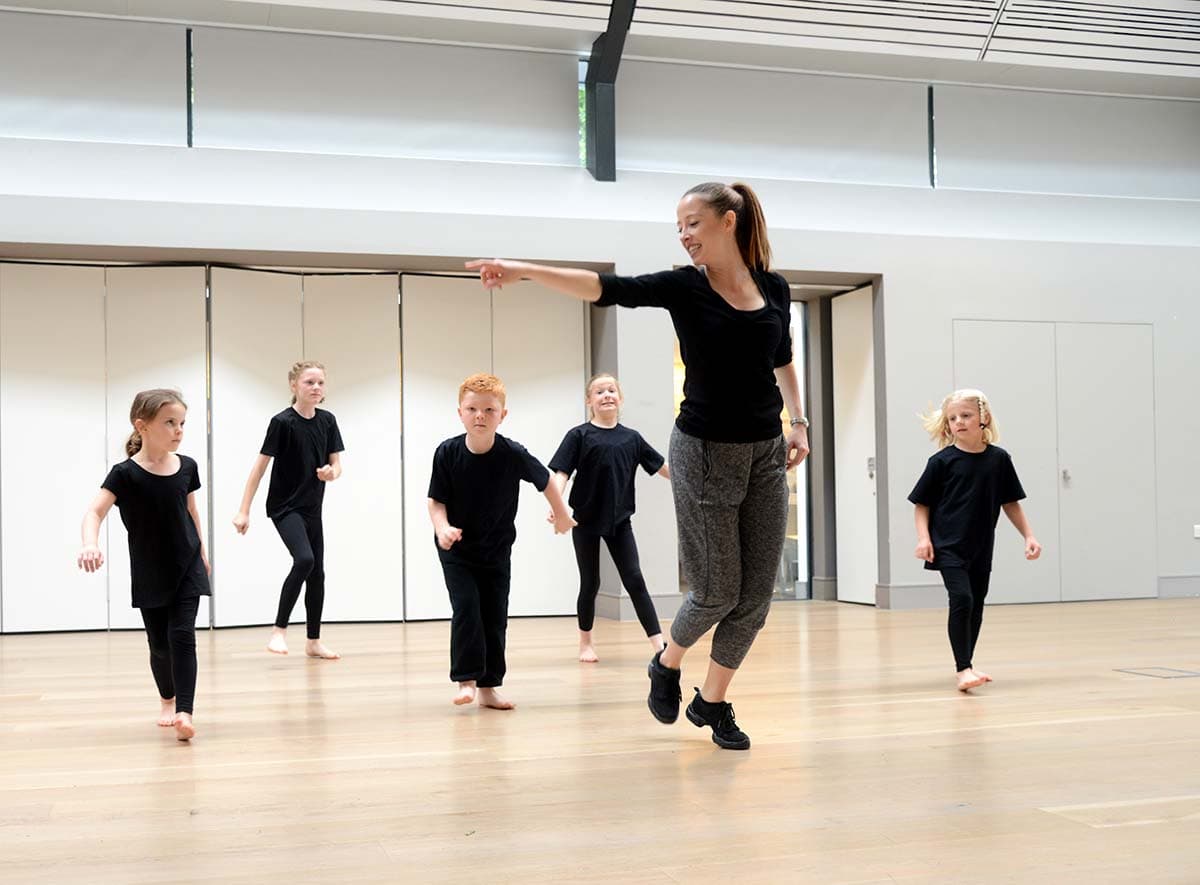
"He never stops moving. He bounces off the sofa, spins in the kitchen, copies every dance he sees on television. But I wasn't sure dance classes were really a thing for boys."
We hear a version of this from parents every term. Usually it comes with a slightly apologetic tone, as if asking whether a boy can join a dance class is an unusual request. It is not. Boys have always danced, boys are welcome in every class we run, and the boys who come through our doors in Chipping Norton and Fairford tend to be some of the most enthusiastic dancers in the room.
This guide covers everything we get asked about boys and dance: why fewer boys start classes than girls, what boys actually gain from dancing, whether ballet or street dance is the better fit, and honest answers to the worries parents raise, from "will he be the only boy?" to "what if he gets teased at school?"
Do boys go to dance classes?
Yes. The short answer is that boys dance, always have, and there are more of them in classes now than there have been for a long time.
The longer answer is that boys are still a minority in most children's dance schools, particularly in ballet, and that gap says far more about culture than about children. Watch any group of two and three year olds when music comes on. The boys move just as instinctively as the girls. They bounce, stamp, spin and wiggle with exactly the same joy. At that age, nobody has told them dance belongs to anyone.
The drop-off happens later, and it happens because of us, the adults. Dance gets marketed with pink leotards and glitter. Party invitations split into football for the boys and dancing for the girls. Somewhere between preschool and Year 2, a lot of boys absorb the idea that dance is not for them, and a door quietly closes on something they might have loved.
The good news is that this is changing, and quickly. Strictly Come Dancing has put male dancers in front of millions of families every autumn for two decades. Street dance crews on talent shows are full of boys. The Royal Academy of Dance, the organisation behind the ballet syllabus we teach, ran a whole initiative called Project B specifically to get more boys and men dancing. Films like Billy Elliot have shifted from being a story about an outsider to something closer to a recruitment poster.
At Intune, boys join our classes at every age, from Dance Explorers at two and a half through to street dance for older children. They are not a novelty. They are simply dancers.
What boys get out of dance classes
Everything we have written about the benefits of dance for young children applies to boys exactly as it does to girls. But a few benefits deserve a specific mention here, because they answer the question parents of boys most often ask: what will he actually get out of it?
Physical strength, coordination and control
Dance is a serious physical discipline. A ballet class builds leg strength, core stability, balance and posture in a way few other children's activities can match. Street dance develops agility, rhythm, quick footwork and body control. None of this is soft exercise. Professional male ballet dancers are among the strongest athletes in any field, routinely lifting a partner overhead while making it look effortless.
Parents of boys who play sport often notice the crossover first. Balance, spatial awareness, landing safely from a jump, changing direction at speed: these are exactly the skills that make a difference on a football or rugby pitch. This is not a new discovery. Rio Ferdinand spent years at ballet classes as a boy in Peckham before football took over, and he has spoken about how much it gave him as a defender. American football teams have sent players to ballet for decades for the same reason. Dance will not replace sport for a sporty boy, but it quietly makes him better at it.
An outlet for energy that has structure
A lot of boys arrive at our classes because their parents describe them as "always moving". Dance takes that energy and gives it shape. Instead of being told to sit still and calm down, a child in a dance class is told the opposite: move, jump, travel across the room, use everything you have. The difference is that the movement has purpose. There is music to listen to, a sequence to remember, a moment to freeze and a moment to explode.
For boisterous, physical children, this combination of freedom and structure is often exactly what they need. They burn energy, but they also practise waiting for their turn, listening to instructions and controlling their bodies. Teachers and parents both tend to notice the difference.
Discipline and focus
Learning a dance takes concentration. You have to hold a sequence of steps in your head, match them to music, and refine them week after week. Children who dance get regular, enjoyable practice at sticking with something difficult until it improves. That habit transfers directly to the classroom, to musical instruments, to sport, to everything.
Confidence and performance
Standing up in front of people and performing is a skill, and like any skill it grows with practice. Boys who dance learn early that they can be watched without wilting. They perform in class showings and shows, hear applause, and build a settled kind of confidence that has nothing to do with showing off. We have written before about how dance builds confidence in quieter children, and it applies to boys just as strongly.
Friendships outside school
A dance class gives a child a second social world. For boys this can matter even more than for girls, because a boy who dances often is not doing the same activity as his classmates. The friends he makes at dance know him in a different context, and the class becomes a place where he is simply himself. Boys in our classes look out for each other, and older boys often become role models for younger ones without any prompting.
Ballet for boys
Ballet has the biggest image problem and the biggest payoff, so it is worth tackling directly.
Strip away the packaging and ballet is athletic training of the highest order. It builds strength, flexibility, balance, discipline and musicality systematically, year on year. The Royal Ballet's male dancers train like elite sportsmen because that is what they are. If you can, watch the BBC's Men at the Barre, which follows the men of the Royal Ballet and shows just how physical their work is. It is a genuinely eye-opening watch for any parent, and worth showing an older boy who thinks ballet might be "girly":
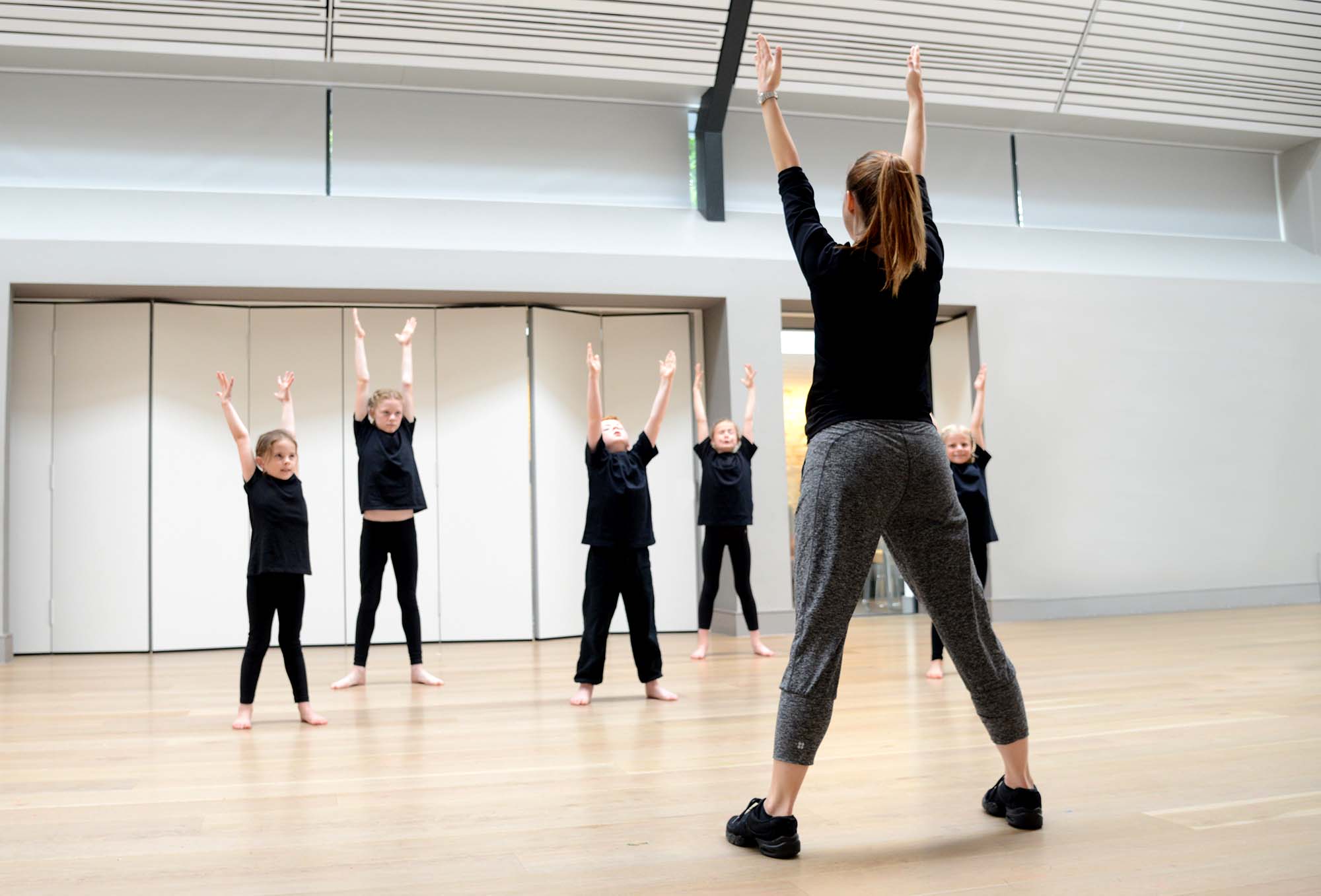
In class, boys do the same RAD graded syllabus as girls, with some steps and exercises written specifically for them as they progress. The RAD syllabus has male-specific content and male examiners and teachers; boys are not squeezed into a girls' programme. Uniform is straightforward too: no tutus, no pink. Boys typically wear a plain t-shirt and shorts or leggings with ballet shoes, which most parents find easier and cheaper than the girls' kit. You can find the details on our uniform page.
What surprises parents most is how much boys enjoy the jumping. Ballet training for boys increasingly emphasises elevation, turns and travelling steps, the big, athletic movements that make audiences gasp. Little boys who love leaping off furniture tend to feel that ballet was designed for them, because in a sense it was.
There is also a practical point worth knowing: because boys are still rarer in ballet, a boy who sticks with it has real opportunities ahead of him. Vocational schools and youth companies actively want male dancers. Carlos Acosta, who grew up doing anything but ballet in Havana until his father marched him to class, ended up leading Birmingham Royal Ballet. Not every boy is heading for a stage career, and that is not the point of children's classes, but doors stay open for boys who dance.
Street dance for boys
If ballet is the hardest sell, street dance is often the easiest. For many boys it is the way into dance, and there is nothing wrong with that.
Street dance grew out of hip hop culture, and its founding figures were overwhelmingly male. Breaking, popping and locking were invented by boys and men, and that heritage is still visible every time a dance crew appears on television. A boy walking into a street dance class is not crossing into anyone else's territory. He is walking into a style built by people like him.
Our street dance classes are high energy and set to music the children actually listen to. Sessions build from a warm-up through skills and technique into routines the class learns together. There is room for individuality: street dance actively rewards children who bring their own flavour to a move, which suits boys who like to put their stamp on things. Here is a taste of what a boys' hip hop class looks like:
Street dance classes also tend to have more boys in them from the start, which makes them an easy first step for a boy who is unsure. Plenty of our dancers start with street, discover they love dancing generally, and add ballet later once the habit is established. Plenty of others go the opposite way. Both routes work.
Ballet or street dance: which suits your son?
We have written a full comparison of RAD ballet versus street dance, but here is the short version through a boy-shaped lens:
| Ballet | Street dance | |
|---|---|---|
| Feel of the class | Structured, calm, builds step by step | High energy, fast moving, music-led |
| Best first fit for | Boys who like mastering skills and clear progress | Boys who want to move to music they know, straight away |
| Physical emphasis | Strength, posture, control, jumps | Agility, rhythm, quick footwork, freestyle |
| Progress markers | RAD grades and exams | Routines, performances, new skills |
| Typical boy worry | "Isn't it for girls?" (it isn't) | Usually none |
| Kit | T-shirt, shorts or leggings, ballet shoes | Trainers and comfortable clothes |
If you genuinely cannot decide, our honest advice is the same as it is for girls: pick the class whose time and place fit your family, and try it. A £10 trial tells you more than any comparison table. Children have a way of confounding predictions, and the sporty boy you were sure would pick street sometimes falls head over heels for ballet.
The worries parents have, answered honestly
"Will he be the only boy in the class?"
Possibly, especially in ballet, and especially at first. We will not pretend otherwise. What we can tell you is what that actually looks like in practice: very little. Young children barely register it. A four year old does not walk into a room and count boys; he sees children, music and a teacher who is pleased to see him.
For older boys it can matter more, and we manage it actively. Our teachers make sure every child belongs in the room, and where we have several boys across classes we help them connect. If it worries you, ask us how many boys are currently in the class you are considering. We would rather give you a straight answer than have you wonder.
"What if he gets teased at school?"
This is the fear underneath most of the others, and it deserves a straight answer rather than reassurance.
Some boys who dance do get the odd comment at school. Most shrug it off, and the ones who handle it best are usually those whose parents treat dance as completely normal, because to them it then is. A child who senses that his own parents are slightly embarrassed about his hobby has been handed the burden; a child whose parents talk about dance the same way they would talk about swimming or cricket usually carries none.
It helps that the cultural wind is at his back. His classmates watch dancers on YouTube and TikTok every day. Footballers celebrate goals with choreography. The gap between "boys' things" and dance is narrowing with every school year, and in our experience the teasing question comes up far more often from parents than it ever does from children.
And it is worth saying: dance itself builds the very confidence that deals with playground comments. A boy who performs on stage in front of two hundred people is not easily rattled by a remark in the lunch queue.
"Is he too old to start?"
Almost certainly not. Boys often start later than girls, precisely because it takes families longer to consider it, and dance schools know this. A boy starting at seven, eight or ten is completely normal, and boys frequently progress quickly once they start because they arrive with strength and enthusiasm. We cover starting ages in detail in what age should children start dance classes, but the honest summary is that the best age to start is the age your child is when he wants to try.
"What should he wear?"
For a trial class, comfortable clothes he can move in and bare feet or trainers depending on the class. That is it. If he joins, the uniform for boys is simple and inexpensive: plain t-shirt and shorts or leggings for ballet, trainers and comfortable clothes for street dance. Full details are on our uniform page. Nobody will ever hand your son a tutu.
"Are the classes any different for boys?"
The class is the same class, and that is deliberate: children dance together, as they should. Within it, good teachers adapt. In ballet, boys have their own arm positions and, as they progress, their own syllabus content with an emphasis on jumps and turns. In street dance there is no difference at all. What your son will not be asked to do is anything that makes him a mascot or an afterthought. He is a dancer in the class, full stop.
How to support a boy who dances
A few things we have learnt from years of teaching boys, offered as friendly advice.
Treat it as normal, because it is. The single biggest factor in whether a boy sticks with dance is whether the adults around him act like it is ordinary. Mention it to grandparents the same way you would mention rugby training. Put the show dates on the family calendar. Normal in, normal out.
Show him dancers to look up to. Watch Strictly together and point out the professionals. Find clips of breakers, of the Royal Ballet's men, of dancers in music videos. Boys, like all children, become what they can see.
Get dads and grandads on side. We say this gently, but the research and our experience agree: a father who shows up, watches the class through the window and says "that looked brilliant" is worth a hundred pep talks. Dads do not need to dance (although our family sessions have converted a few). They just need to be visibly, uncomplicatedly proud.
Let him choose his style. If he wants street and you had visions of ballet, let him have street. A boy dancing any style is a boy dancing, and the styles feed each other anyway.
Do not make him an ambassador. He is six and he likes jumping to music. He does not need to hear that he is challenging stereotypes or representing anything. Keep it light, keep it his.
Boys at Intune Dance
Boys are welcome, wanted and looked after in every class we run, from Dance Explorers for children of two and a half, through Pre-Primary, Primary and graded RAD ballet, to our street dance classes for school-age children. Ballet runs in Chipping Norton and Fairford. Street dance and Dance Explorers are in Chipping Norton. Saturday mornings work for family logistics and siblings, and our teachers are experienced in making sure every boy who walks in feels like the room was expecting him. Because it was.
If your son is curious, or if you are curious on his behalf, the easiest next step is a trial class. It costs £10, there is no commitment, and it answers the question better than anything you can read, including this article. Come and watch his face during the warm-up. That usually settles it.
Boys dance at Intune. Ballet in Chipping Norton and Fairford, street dance in Chipping Norton, RAD-qualified teachers, and a £10 trial class with no commitment.
Questions before he tries a class?
If there is anything we have not covered, from how many boys are in a specific class to what happens at a first session, just get in touch and ask. We give straight answers, and we would love to meet him.